Project background
Scientific Background
Zooplankton play a central role in marine ecosystems, mediating energy transfer between primary producers and higher trophic levels and influencing biogeochemical cycles. They are also a key conduit of carbon to the deep ocean through the biological carbon pump (BCP).
Increasing evidence additionally points to a potential role for zooplankton in marine aerosol production, through processes such as the generation of organic-rich sea spray and the transformation of biologically derived material in the surface ocean. Both of these processes are particularly important in the Southern Ocean where data are often sparse and the environment increasingly influenced by a changing climate.
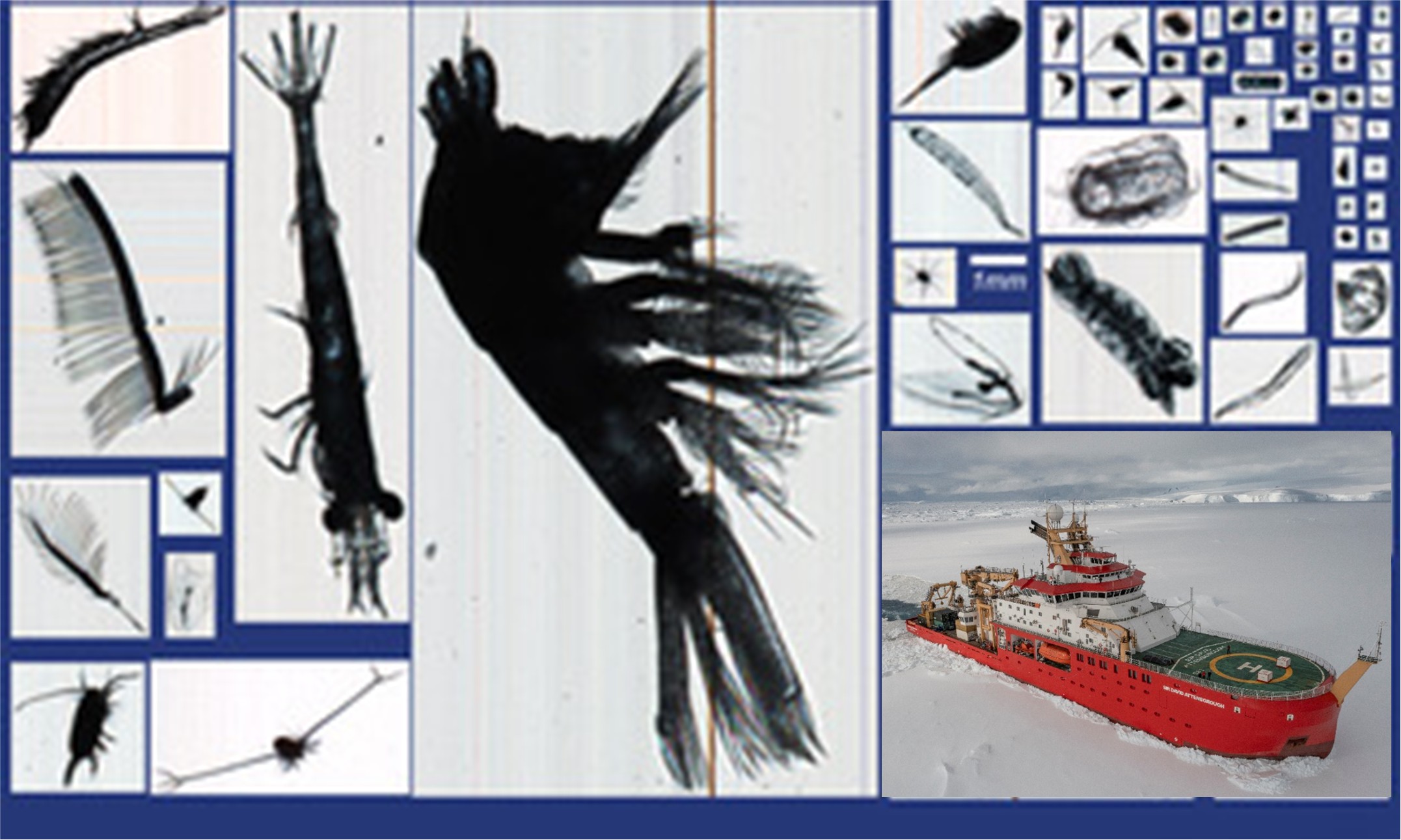
Robust, spatially resolved observations of zooplankton abundance, size structure and taxonomic composition are essential for advancing our understanding of ocean-atmosphere coupling, yet zooplankton sampling is usually based on net samples taken at specific locations. A recent project on board the RRS Sir David Attenborough trialled a continuous in-situ plankton imager to collect data along a Southern Ocean oceanographic transect. Alongside this, data were collected on environmental parameters and marine aerosols. The project will utilise this unique dataset alongside state-of-the-art AI-based image classification, to deliver novel insights into near-surface zooplankton community structure and their potential influence on marine aerosol generation.
Research Methodology
The core dataset consists of high-frequency image data that have been classified into taxonomic groups using an AI-based classifier. A primary objective is to derive estimates of zooplankton densities from image-based counts. This will involve developing and validating conversion methodologies that translate numbers of detected objects into volumetric densities, explicitly accounting for variations in sampling parameters and changes in image acquisition settings (including differing size thresholds applied during the sampling period). Using these density estimates, the project will quantify the relative contributions of major zooplankton taxa or functional groups (e.g. size) along the transect, examining how community structure varies in response to changing oceanographic conditions.
The outputs of this project will contribute to wider research investigating the potential contribution of zooplankton to marine aerosol production. The zooplankton data will be integrated with concurrent underway environmental measurements, including temperature, salinity and chlorophyll fluorescence, to explore relationships between biological and physical drivers. Statistical and multivariate analyses will be used to identify environmental correlates of zooplankton abundance, size structure and community composition, providing insight into the mechanisms shaping observed patterns and constraints for linking biological variability in the upper ocean to aerosol processes at the air-sea interface.